Chen Beike
Chen Beike is one of the three outstanding men of Chaoshan, named with Lin Daqin and Weng Wanda. He is less famous than the other two, but his shadow falls across Chaoshan house forms and local story alike.
Life生平
Chen Beike (1478–1534), whose name was originally Chen Guang, courtesy name Shijie, style Dongshi, was from Guiyu in Chaoyang, in what is now Huamei village, Guiyu town, Chaoyang district, Shantou. He passed the examination in 1511, the sixth year of the Zhengde reign. He served as supervising secretary in the revenue section, then as vice-minister of the Court of Judicial Review and as huangmen shilang, and was granted the titles ‘Minister of the Purple Pavilion’ and ‘the Huangmen household’.
In 1519 he went south with the Zhengde emperor and refused the local tribute of Lingnan produce. In 1531, the tenth year of the Jiajing reign, he resigned and went home over the power of the eunuchs.
The three outstanding men and the three Dongs三傑與三東
He is named with Lin Daqin and Weng Wanda as the three outstanding men of Chaoshan; the three styled themselves Dongpu, Dongshi and Dongya, hence the three Dongs. The grouping is a later acknowledgement and appears in no document of the time; when it is cited, that has to be said.
What is worth noticing is where the three came from: Lin Daqin from Haiyang, Weng Wanda from Jieyang, Chen Beike from Chaoyang — one county each. The three outstanding men is in fact a later joint commendation of three counties within one prefecture.
Two local matters兩件與地方有關的事
Local historical writing credits him with pushing Chaoshan houses towards the capital’s manner of building, and so with the forms known as xiasanhu, the downhill tiger, and sidanjin, the four-point gold; hence the saying that Chaoshan houses are built like palaces. The saying is everywhere, but it belongs to legend: house forms take shape over long stretches of time, and putting the result down to one man has no direct evidence behind it. Such claims are marked as legend.
In 1533, the twelfth year of the Jiajing reign, he and his elder cousin Chen Jiang together started the street-stall exhibition of painting and calligraphy at Guiyu. It has run ever since and is on the intangible heritage list.
What survives遺蹟
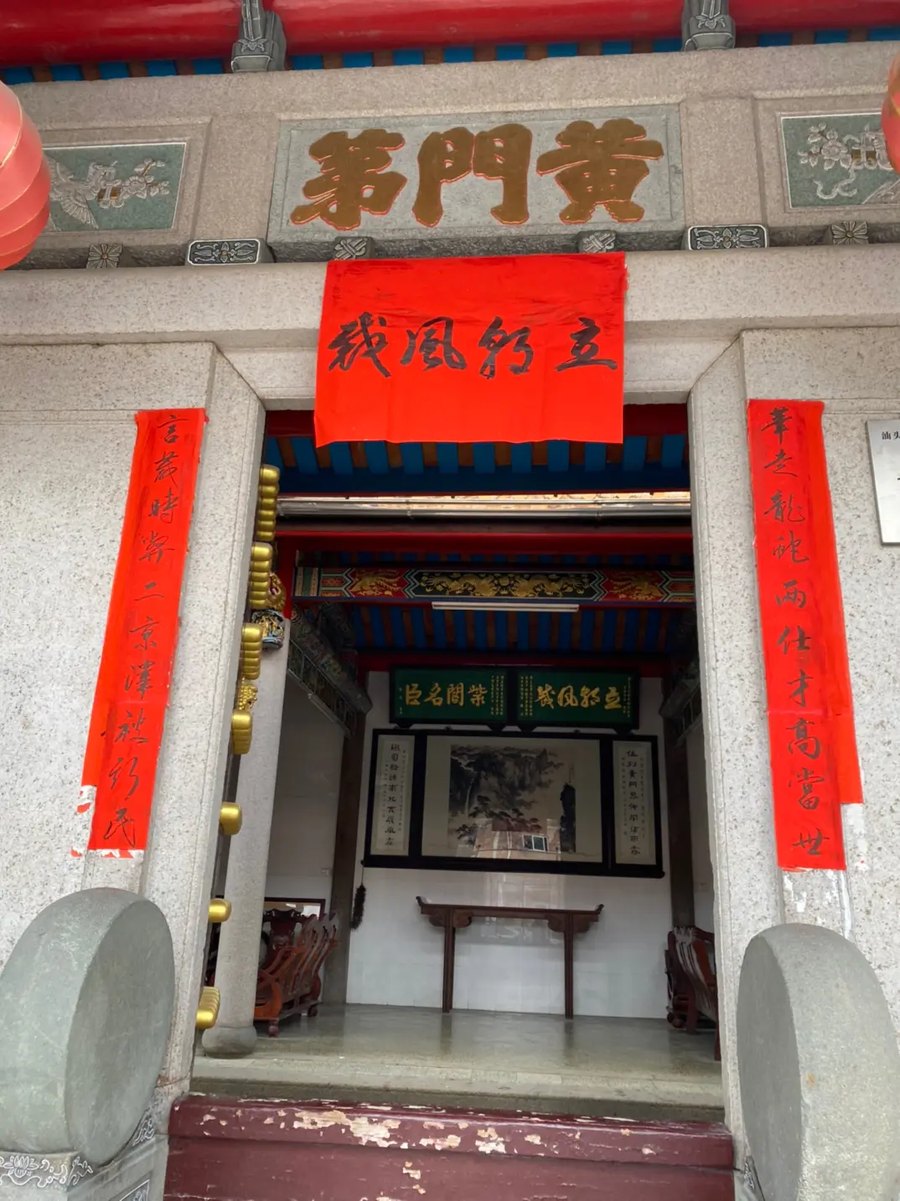
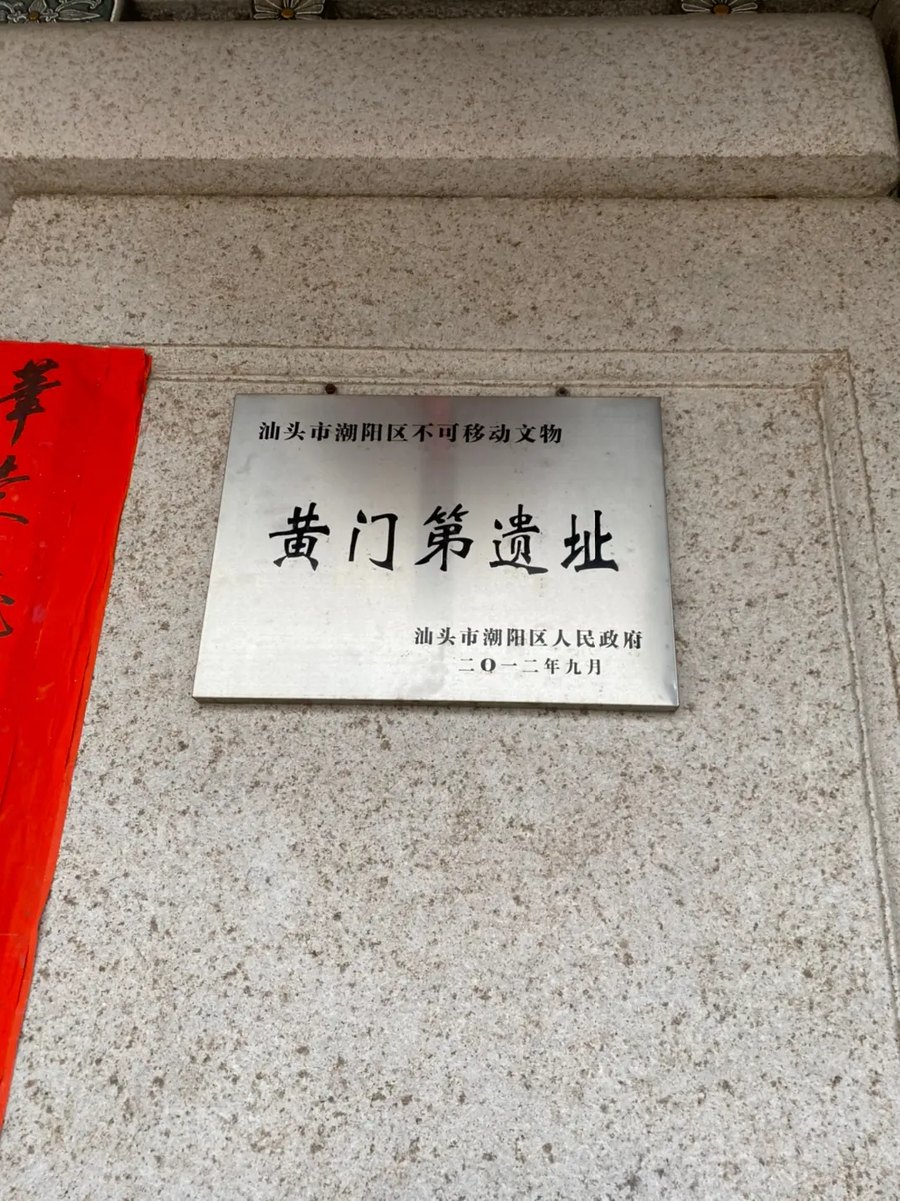
The old residence, the Huangmen Di, still stands, with a Jiajing imperial edict and Ming boards. The plaque before the gate was set up by the Chaoyang district government of Shantou in September 2012 and reads ‘Site of the Huangmen Di’; it is an immovable relic of the district. His story has been made into a Chaoshan-dialect television series, The Legend of Chen Beike, the Emperor’s Uncle. The popular name ‘Chen the Emperor’s Uncle’ comes from a tale in which he passed himself off as the emperor’s uncle to get into the palace and claim kin — that belongs to story, not to record.
Sources來源
Dictionary entries under the three outstanding men of Chaoshan; local historical material; reports on the Guiyu street exhibition.
Last revised: 5 November 2026
 粤公网安备44522102000407号