Guo qiao, crossing the bridge
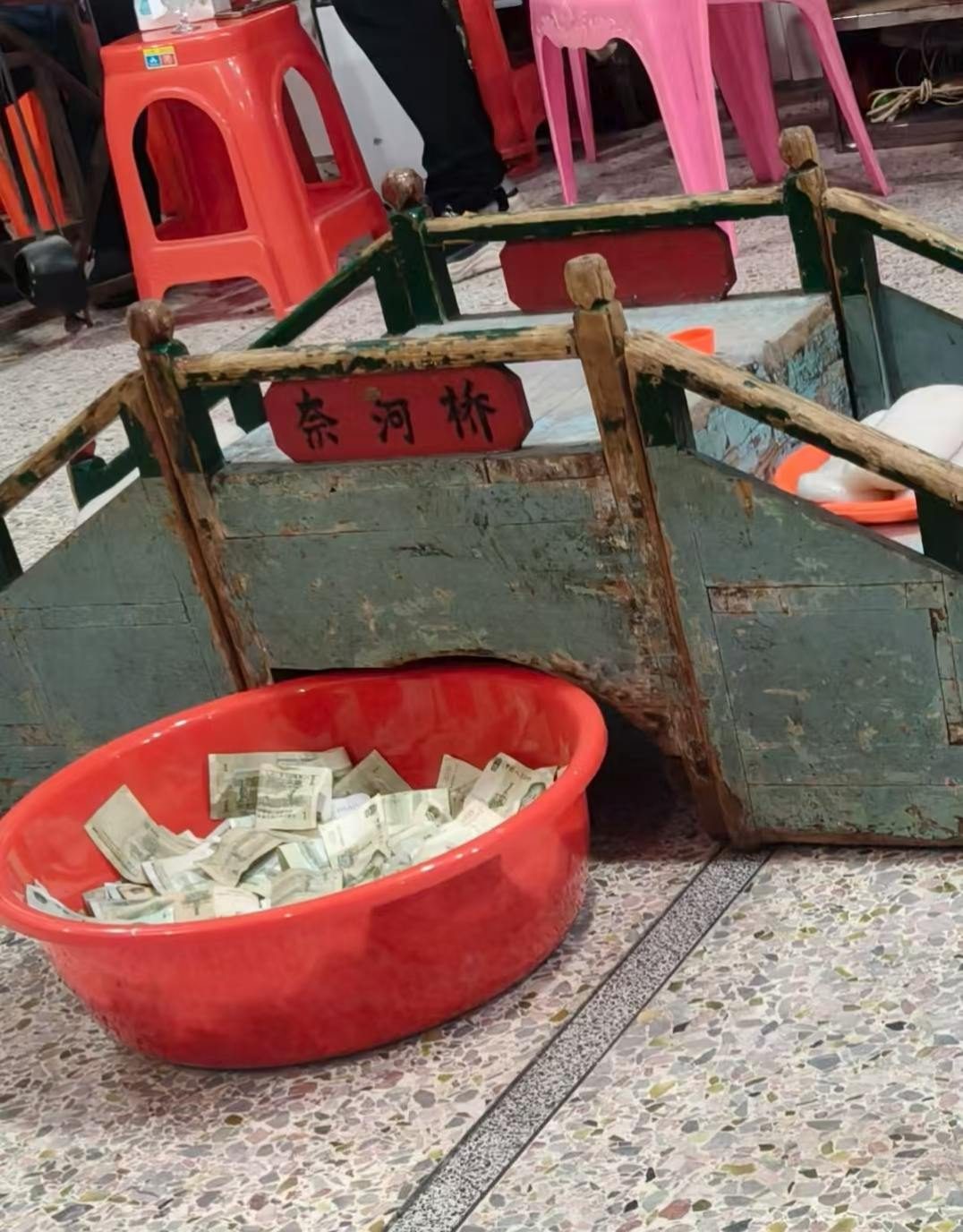
In merit-making a bridge of the seven continents is built before the coffin; the mourners carry the incense burner and lead the soul across it, answering the bridge official all the way.
Pronunciation guò qiáo|Rites of passage|One entry in the Chaoshan glossary
What it means
When merit-making reaches its central passage, a bridge of the seven continents is put up before the coffin. The mourners carry the incense burner and lead the soul onto the bridge, chanting as they go and answering the bridge official, throwing coins under the bridge as the toll. The bridge itself is paper.
The official asks a question and the mourners answer; the questions are mostly about the dead person’s life and the reason for the crossing, and only when they are answered is the way opened. Once this passage is over, merit-making carries on.
When you see it
Within the merit-making of a bereaved household, usually at night, when the lamps before the coffin are all lit.
Words easily confused
Crossing the bridge happens inside merit-making and is for leading one’s own dead across; the feeding of the dead has no bridge, that occasion being food scattered for those whom nobody sacrifices to. Nor is it the seven-week rites, which are a sacrifice every seventh day after the burial and build no bridge.
Custom in Chaoshan funerals; this page describes only, and neither endorses superstition nor urges anyone to follow it.
Read next: Funeral custom: from merit-making to the coffin leaving.
See also: Rites of life: the five thresholds side by side.
Same group: the bathing, calling back the soul, the release.
Home › Glossary › Rites of life › Crossing the bridge
Text on this site is CC BY-SA 4.0; copyright in images is reserved and commercial use requires a separate licence.
Last revised: 3 November 2026