Guo fan, going across the sea
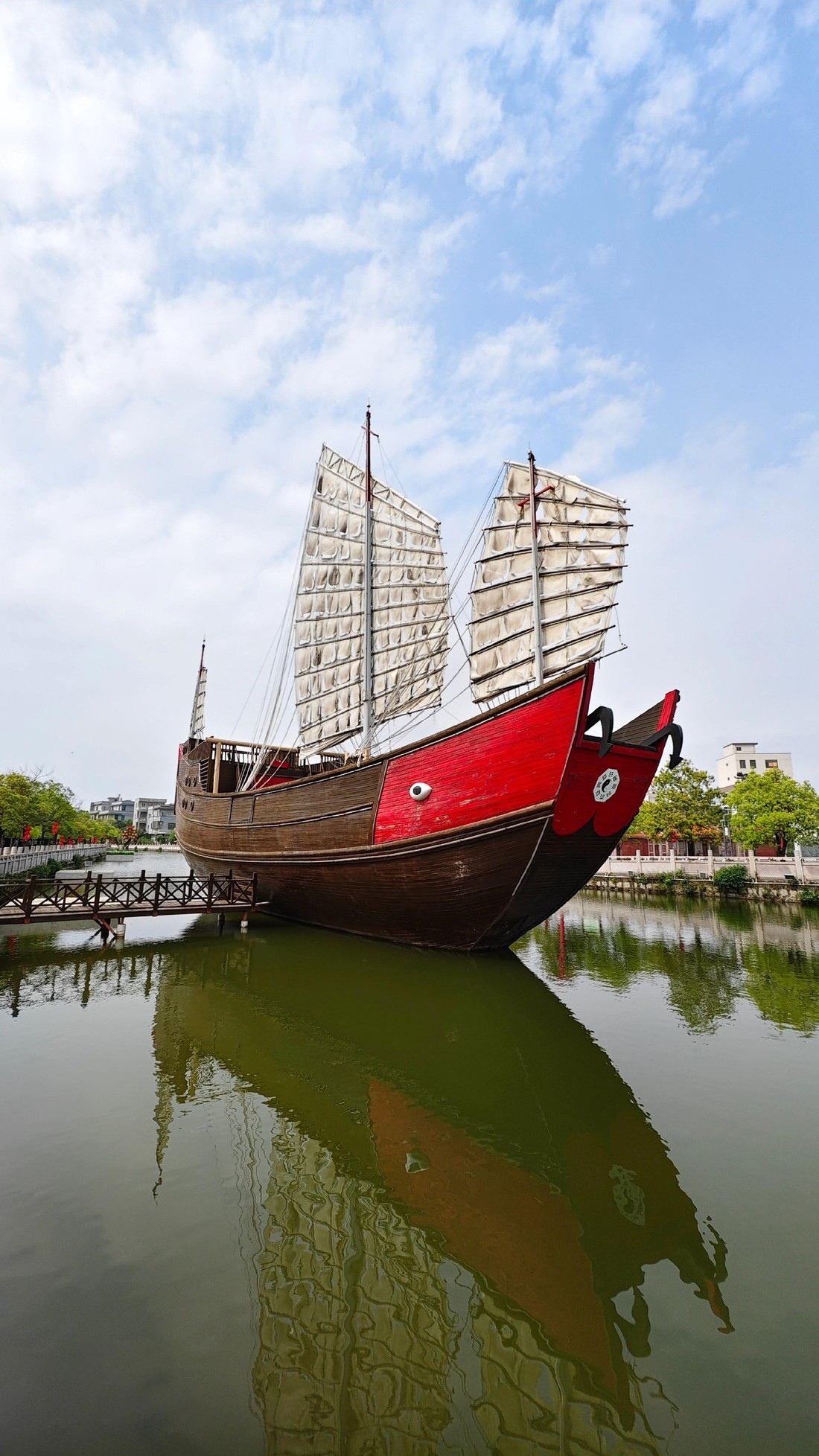
Crossing to Siam and Malaya to make a living, mostly aboard a red-bowed ship out of Zhanglin.
Pronunciation guò fān|Dialect and emigration|One entry in the Chaoshan glossary
What it means
Guo is to cross over, fan is overseas. Going by sea to Siam, Malaya, Singapore or Vietnam to earn a living was all called guo fan.
The usual way out was Zhanglin, the chief port of eastern Guangdong in the Qing: red-bowed ships left from there and ran south with the monsoon, the passage taking from a fortnight to a month. The crossing kept to the wind — the ship went south when the northeast monsoon came, and came back on the southwest. One sailing a year; miss it and you waited for the next.
When you see it
From the Qing into the republic. Those who went were mostly young men, leaving parents, wife and children behind and keeping in touch by remittance letter — the arrangement that tied the villages here to the south seas.
Words easily confused
Guo fan is the crossing, fan ke is the person who made it. Going down to the south seas is the general phrase; here people say guo fan.
Read next: Going across the sea: from Zhanglin to the south seas.
Same group: fan ke, the returned emigrant, the red-bowed ship, Zhanglin port.
Home › Glossary › Dialect and emigration › Going across the sea
Text on this site is CC BY-SA 4.0; copyright in images is reserved and commercial use requires a separate licence.
Last revised: 3 November 2026